CRB Trainee Spotlight: Paolo Sinopoli (Hopper lab)
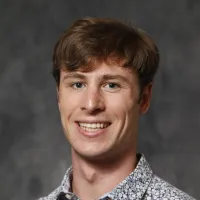
Paolo Sinopoli, a senior undergraduate in the Hopper lab, has been diligently contributing to the world of RNA research for almost 4 years. As a result of his proactive involvement in science, he has co-authored multiple publications in premier scientific journals, was awarded three Ohio State Undergraduate Research Scholarships, a Pelotonia Undergraduate Research Fellowship, and the prestigious Barry M. Goldwater scholarship, among others from the National Cancer Institute, Department of Molecular Genetics, and the RNA Society.
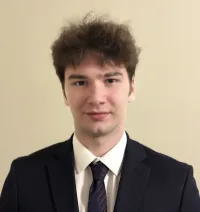
Born in Germany and raised in Canton, Ohio, Paolo Sinopoli is an example of how early exposure to research can nurture a budding scientific career. Initially, Paolo wanted to become a medical doctor, enrolling in the pre-medicine track as Molecular Genetics major. However, while attending an introductory information session for his major, Paolo met Dr. Anita Hopper and became intrigued when he learned that undergraduates could do hands-on research. That week, he contacted Dr. Hopper to ask if he could join her lab. To his surprise and excitement, she agreed.
The Hopper lab studies tRNAs, small noncoding RNAs that are critical to protein synthesis. Upon joining the lab, Paolo trained under the mentorship of graduate student Ernesto Roldan-Bonet, where he aimed to discover the unknown proteins that shuttle tRNAs between the cytoplasm and nucleus. During his first year of training, Paolo noted that he had many failed experiments. But, as he explained, he always told himself that “in a couple of years, I know I will be good at this”. As his experience grew, and his experiments started working, Paolo soon realized that his ambition to attend medical school was no longer aligned with his newfound love of research.
After establishing his presence in the Hopper lab, Paolo caught wind of an interesting project during lab meeting. Dr. Regina Nostramo, a postdoctoral scholar, presented preliminary data that tRNA introns, sequences normally discarded by the cell during tRNA maturation and considered “cellular junk”, were in fact capable of regulating mRNA levels. Upon hearing this, Paolo was immediately fascinated and jumped at the opportunity to contribute. One major challenge was predicting additional targets of tRNA introns to test experimentally. With the help of the supercomputer center, Paulo built his own computational workflow that searched the genome for matches between tRNA introns and mRNAs. Over the course of this project, Paolo found over 100 new pairings that Dr. Nostramo tested experimentally. Together, the two published their findings in Molecular Cell.
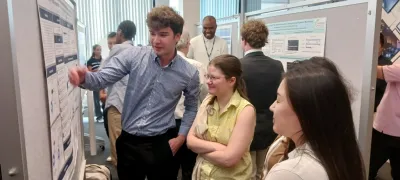
Throughout our interview, Paolo reiterated that his success was largely driven by the excellent mentorship and encouragement he received from the Hopper lab. While this is certainly true, it is also evident that Paolo carries with him an infectious curiosity about the world of biology. This quality feeds the passions of others, and I often found our conversation drifting into other topics that we both found interesting. Paolo soon mentioned that his diverse knowledge of biology was further advanced by the two summer internships that were inspired by the desire to, in his own words, “learn what nature is capable of”.
His sophomore year, Paolo was hired as a summer intern by Dr. Sandra Wolin at the National Cancer Institute in Maryland. Here, under the mentorship of an experienced staff scientist, Paolo studied Ro60 ribonucleoproteins, which he describes as “RNA-scaffolded molecular machines”. These complexes, which involve multiple proteins tethered via Y RNAs (a type of small noncoding RNA), were previously implicated in RNA degradation in bacteria and autoimmune diseases in humans. During the summer, Paolo generated preliminary data that they may also be involved in RNA repair.
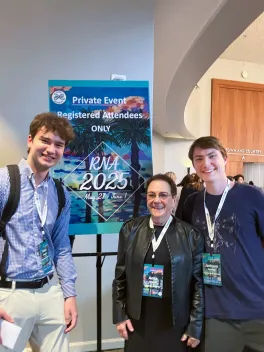
The following year, inspired by a biophysics seminar hosted by the Center for RNA Biology, Paolo reached out to Dr. Jamie Williamson at the Scripps Research Institute, who welcomed him as a summer intern. During his time in San Diego, he was co-advised by Dr. Megan Ken and studied the assembly of HIV. By using a special mass photometry setup, the Ken and Williamson labs could model the assembly of HIV packaging components on an artificial cell membrane. Over the summer, Paolo made substantial contributions to the project by optimizing the purification protocol for Gag, a core structural protein of HIV-1, and several Gag mutants.
By the time he returned to Ohio State for the fall semester of 2025, Paolo had accrued an impressive amount of lab experience and was confident he wanted to attend graduate school. Rightfully, his efforts were soon recognized by a handful of PhD program offers from MIT, Harvard, and Yale, among others. Though he has not yet decided which program he will join, I asked Paolo where he saw himself in five years. Without hesitation, he said “still doing science”.
Paolo’s message to undergraduates interested in research is simple: you will reap what you sow. Because the initial barrier for working in a lab is as easy as emailing a professor, he suggests reaching out if you have even the slightest urge to do so. Over time, he was able to build a respectable foundation of knowledge that was driven by his excellent mentors and unique lab environments. In my graduate student opinion, though, these opportunities would not have been possible without Paolo’s remarkable willingness to learn and grow. The Center for RNA Biology wishes him well in his future endeavors and in the many discoveries that lie ahead.
